A really good herbal tea does not happen by accident. It starts with the herbs themselves, and with a few small choices you make before the water ever gets hot. Once you understand how to pick and pair them, you can build a cup that tastes exactly the way you want it to.
This is one of our favorite things to talk about, so let us share how we think about choosing and blending herbs for tea. If you want the actual brewing steps, we cover those separately in how to make herbal tea. Here we are focused on what goes in the cup.
Which part of the plant matters
Herbs are not all the same, even within a single plant. The part you use changes both the flavor and the way you brew it.
Soft parts, like leaves and flowers, give up their flavor easily. Peppermint, chamomile, lemon balm, and hibiscus all fall here. They are gentle to work with and forgiving for beginners.
Harder parts, like roots, bark, and seeds, hold onto their flavor more tightly. Ginger, cinnamon, licorice root, and fennel seed need a little more heat and time to open up. Keeping this in mind helps you know what to expect from a blend.
Building a balanced blend
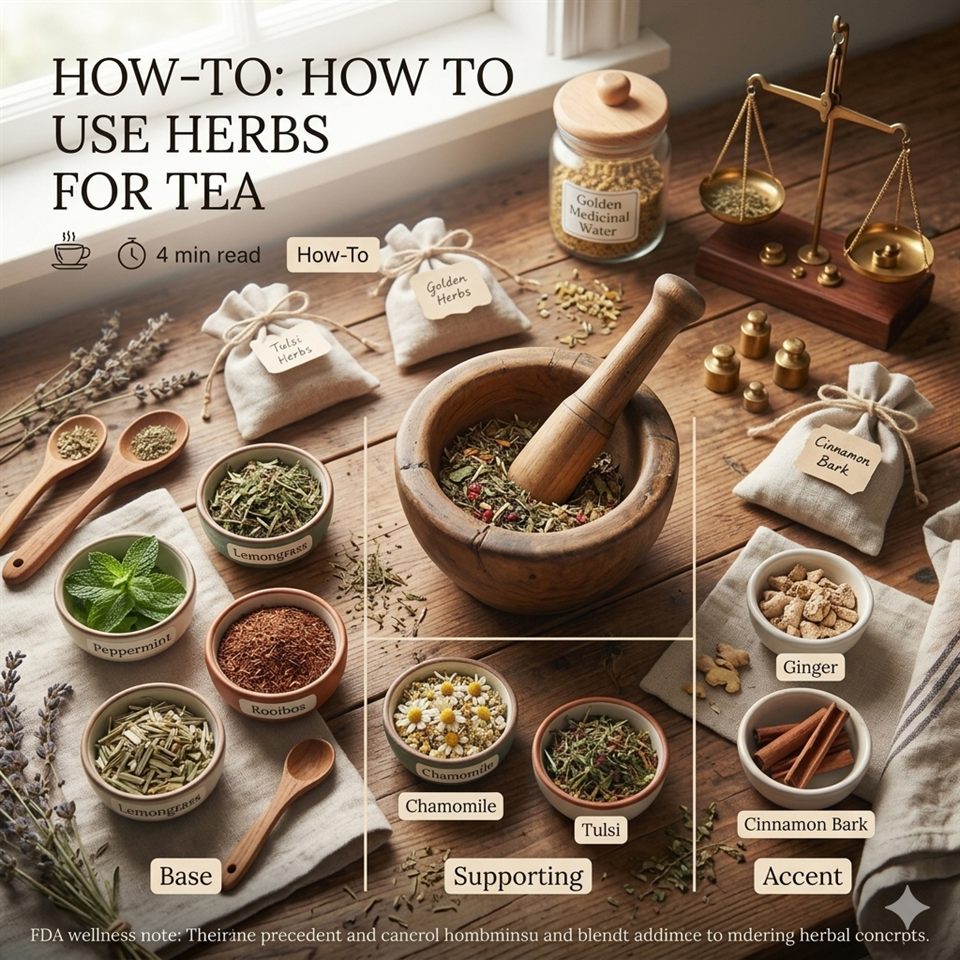
When we put a blend together, we think of it in three parts. It is a simple framework, and it keeps a tea from tasting flat or muddled.
- A base. This is the bulk of your blend and the main flavor. It is usually something mild and pleasant you would happily drink on its own, like peppermint, rooibos, or lemongrass.
- A supporting herb. This rounds out the base and adds depth. Chamomile, tulsi, or nettle work nicely in this role.
- An accent. Just a small amount of something bold to make the cup interesting. A pinch of ginger, a little cinnamon, some dried orange peel, or a few lavender buds. A light hand is key here, because accents can take over fast.
A rough starting point is about three parts base, two parts supporting herb, and one part accent. Taste as you go and adjust. Blending is personal, and your palate is the real guide.
Fresh or dried, single or blend
Both fresh and dried herbs make lovely tea. Fresh herbs feel bright and lively, though you generally need more of them since they hold a lot of water. Dried herbs are more concentrated, store well, and are what most blends are built on.
You also do not have to blend at all. A single herb, brewed on its own, is a wonderful way to get to know a plant. We often suggest starting there, then branching into blends once you know what each herb tastes like by itself.
A couple of simple starter blends
If you would like somewhere to begin, here are two easy pairings we come back to often.
For something calming in the evening, try chamomile as your base with a little lemon balm and just a whisper of lavender. For something warming and a bit spiced, use rooibos as your base, add a small amount of cinnamon, and finish with a thin slice of fresh ginger.
From there, let your curiosity lead. Browse our herb collection for ideas, and if you would rather we build something around your taste, we are glad to make a custom blend. Just reach out and tell us what you enjoy.
The best blend is the one you actually look forward to drinking. Trust your own taste and keep it playful.
A note on wellness: These statements have not been evaluated by the FDA. Our products and articles are for general wellness and educational purposes and are not intended to diagnose, treat, cure, or prevent any disease. Always talk with a qualified healthcare provider before using herbal products, especially if you are pregnant, nursing, taking medication, or managing a health condition.