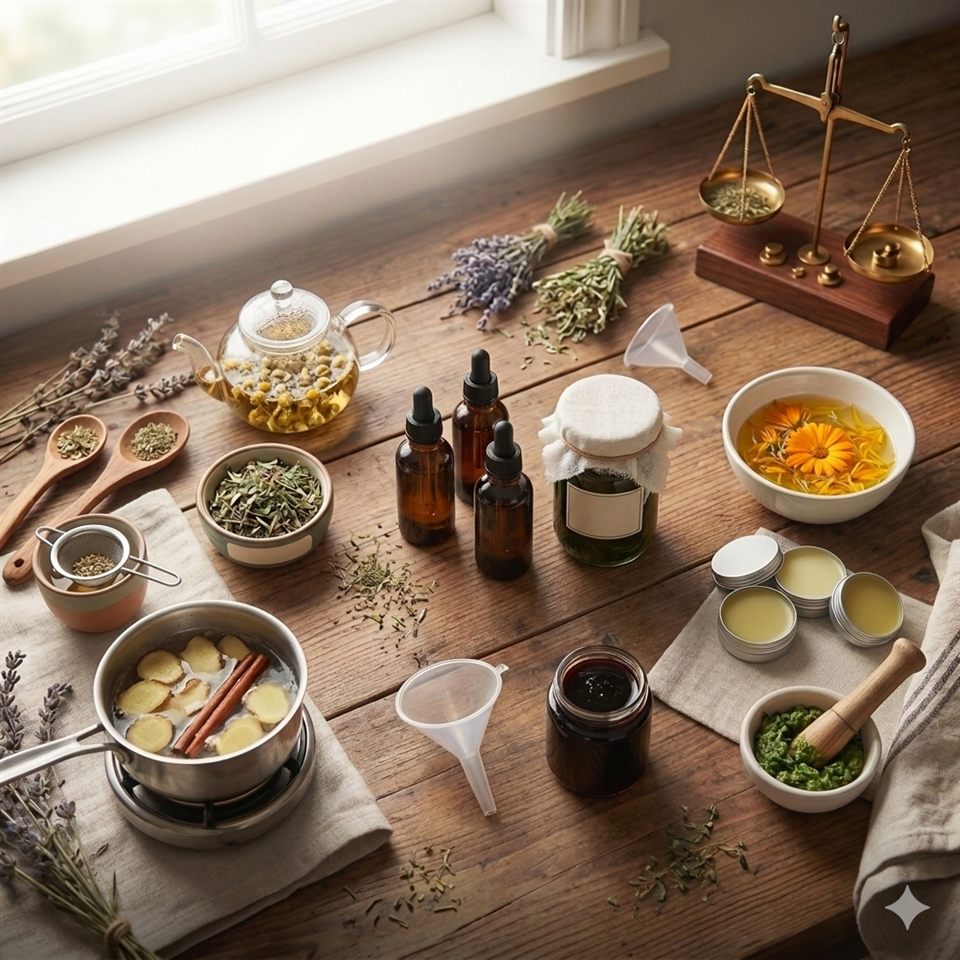
When people first start working with herbs, one question comes up again and again. What do I actually do with them? A jar of dried chamomile or a piece of fresh ginger root can become a lot of different things, and the form you choose changes how you use it and how it fits into your day.
We have been making herbal products by hand here in Laredo for a while now, and we love talking about the how of it all. So here is a friendly walk through the main preparations, what each one is, and when it tends to shine.
Water-based preparations
These are the simplest place to begin. All you need is the herb and hot water.
An infusion is what most of us call tea. You pour hot water over the softer parts of a plant, like leaves and flowers, and let them steep. Think chamomile, peppermint, or nettle. It is quick, gentle, and easy to make a cup at a time.
A decoction is for the tougher parts, like roots, bark, and seeds. These need more coaxing, so instead of steeping you gently simmer them in water for a while. Ginger, cinnamon bark, and dandelion root all do well this way. If you want to go deeper on both methods, we wrote a full step-by-step guide to making herbal tea.
Concentrated extracts
Sometimes you want something stronger and longer-lasting than a fresh cup of tea. That is where extracts come in.
A tincture is an herb soaked in alcohol for several weeks. The alcohol pulls out the plant compounds and preserves them, so a small dropperful goes a long way and the bottle lasts a long time. Tinctures are handy when you want something quick and portable.
A glycerite works on the same idea but uses vegetable glycerin instead of alcohol. It comes out naturally sweet, which makes it a nice choice for folks who would rather skip the alcohol.
A syrup combines a strong herbal decoction with honey or sugar. The sweetener adds flavor and helps it keep. Elderberry syrup is the classic example, and it is an easy one to love.
Preparations for the skin
Not every herb is meant to be swallowed. Some of our favorites are made to go on the skin.
An infused oil is made by steeping herbs in a carrier oil, like olive or sweet almond, until the oil takes on their character. Calendula oil is a well-loved one. It is useful on its own and it is also the starting point for salves.
A salve, sometimes called a balm, is an infused oil thickened with beeswax so it holds its shape. Salves are easy to carry, easy to apply, and they stay put where you need them. Many of our remedies take this form.
A poultice is the most rustic of the bunch. You mash fresh or rehydrated herbs into a paste and apply it directly, usually held in place with a cloth. It is old-fashioned and simple, and there is something grounding about it.
Choosing the right form
There is no single best preparation. It really depends on the herb and on what you are reaching for.
A cup of tea is soothing and social. A tincture is fast and travels well. A salve meets your skin exactly where you want it. Part of the fun is learning which form suits which plant, and that comes with a little time and curiosity.
If you would like to experiment, browse our herb collection and see what calls to you. And if you would rather have something ready to go, we are always happy to put together a custom blend. Feel free to reach out and tell us what you are hoping for.
However you start, start small and stay curious. Herbs have a way of teaching you as you go, and that is half the joy of it.