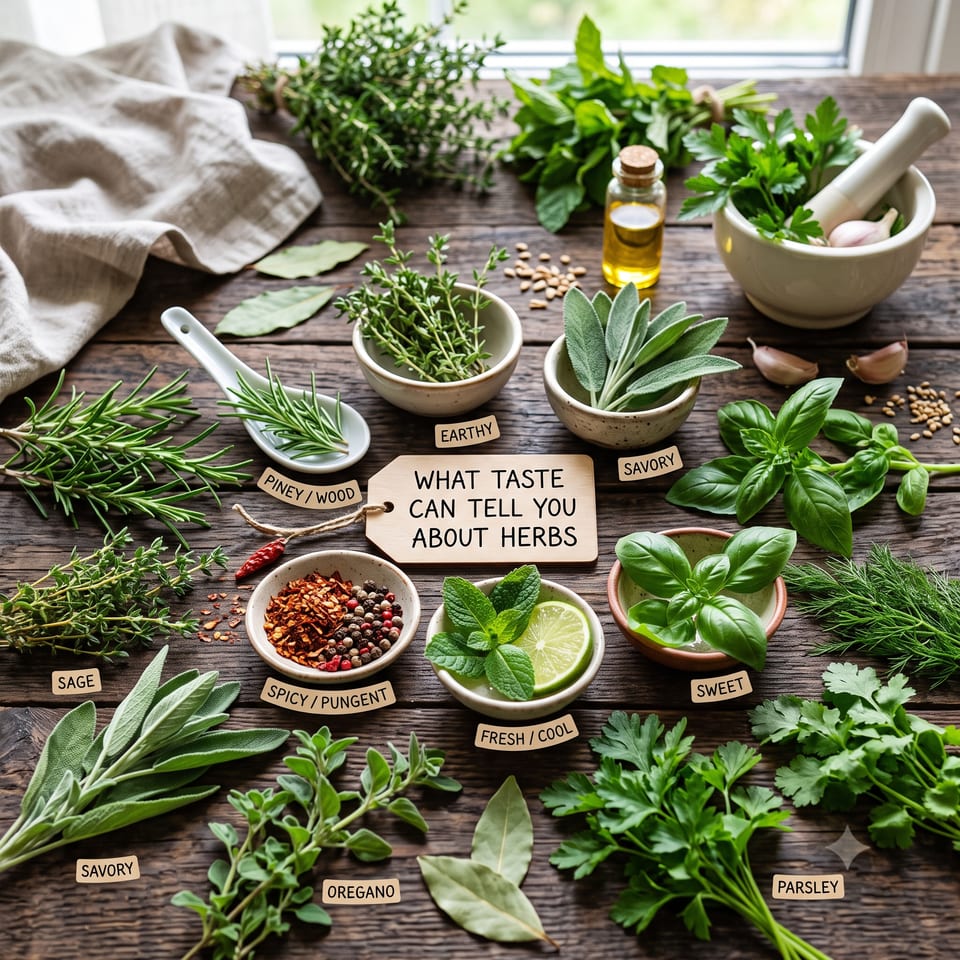
Pay attention the next time you taste something new. Before you have even had a chance to think about it, your body has already made up its mind. Your mouth waters, or it puckers, or a little warmth spreads across your tongue. Most of us can name our favorite flavors in a heartbeat, yet we rarely stop to ask the more useful question: what is that taste actually telling me?
Taste is a kind of language
In the herbal traditions we love and learn from — including the rich healing traditions of Africa — taste has always been more than pleasure. It is information. Long before anyone drew up a single herbal chart, people understood a plant by putting it on the tongue. The taste told them what that plant tended to do: whether it moistened or dried, warmed or cooled, stirred things up or settled them down.
Your body starts responding to that information right away. Digestion doesn’t wait for food to reach your stomach — it begins the moment you see, smell, and taste. Researchers have even found taste receptors in places far from the mouth, including the gut, the pancreas, and the lungs. In other words, your body keeps listening to a plant long after you swallow.
Taste isn’t the only way an herb speaks to you. Its smell, its color, where it grows, and how it feels in your hands all carry meaning too. But if you want one clear place to begin, taste is hard to beat. Here is what a few of the main tastes tend to tell us.
Sweet: soft and building
When something tastes truly sweet — not candy-sweet, but that gentle, green plant-sweetness — your body tends to relax. Your mouth waters and there is a soft, coating fullness. That feeling is your first clue.
Sweet herbs are usually moistening and building, and their chemistry backs this up. Many are rich in polysaccharides and saponins, the compounds behind that smooth, slippery texture long used to soothe dry, worn-out tissues. It is why herbs like licorice and marshmallow root seem to coat the throat and gut. You are quite literally feeling what they do as you taste them.
You can see this echoed in traditional use. In parts of South Africa, licorice was chewed to “make one talk nicely” — to relax the tongue and ease conversation. In North Africa, it was reached for during coughs and hard thirst. Different places, same thread: the soothing, moistening quality you notice the instant it touches your tongue.
Bitter: the wake-up call
Now think of bitter, the taste most of us instinctively push away. Ironically, it may be the most talkative of them all. Humans carry around 25 different bitter receptors — more than for any other taste — almost as if the body really wants to pay attention here. The moment bitter lands, something shifts. Saliva flows, and deeper down, the digestive system begins to stir.
That response traces back to the compounds bitter herbs carry, especially bitter glycosides and alkaloids, long associated in traditional practice with waking up digestion and supporting the liver and gallbladder. Many bitters also feel cooling, a quality traditionally used to settle what the old texts liked to call “excess heat.” You don’t have to memorize a word of that to feel it working.
Pungent: herbs that move
Then there are the pungent herbs, and these do not go quietly. You often know them before they ever reach your tongue — the ones that give up their scent the second you crush a leaf between your fingers. Taste one and you feel it right away: heat, a sharp edge, sometimes a little burn. Your nose runs, your eyes water, and a flush of warmth spreads out. That is activation.
Herbs like this are usually full of volatile oils, light compounds that evaporate easily and carry both a strong smell and a strong effect. It is worth knowing that much of what we call “taste” is really smell, which is why you can often guess how a pungent herb will taste just by breathing it in first. Your body is already reading it.
Pungent herbs tend to act fast. Traditionally they have been used to get things moving — to support circulation and help with sluggishness, gas, or congestion. Think ginger, garlic, cayenne. They are more than “spicy.” Herbalists call them diffusive, meaning they spread through the body and even help carry other herbs along with them. That is why a good formula often uses just a pinch of something pungent: not only for its own sake, but to help the whole blend work together.
Let the plant do the teaching
Your taste buds were never only about enjoying dinner. They are part of a quiet conversation between you and everything you eat — a way for your body to recognize what it is getting and how to respond. Herbs speak that same language. Every time you taste one, you are handed a clue about what it is doing inside.
If you have been trying to learn herbs by memorizing long lists, you may be making it harder than it needs to be. The plant is already telling its story — through taste, through smell, through the way your body answers the moment you meet it. Start paying attention to that, and something shifts: you stop guessing and start understanding. That is the quiet beginning of real confidence with herbs, and a lovely place to begin your own journey.
Curious to taste your way in? Browse our herb collection, and if you would like a blend built around the tastes and herbs your body is drawn to, reach out — we would love to help.
A note on wellness: These statements have not been evaluated by the FDA. Our products and articles are for general wellness and educational purposes and are not intended to diagnose, treat, cure, or prevent any disease. Always talk with a qualified healthcare provider before using herbal products, especially if you are pregnant, nursing, taking medication, or managing a health condition.