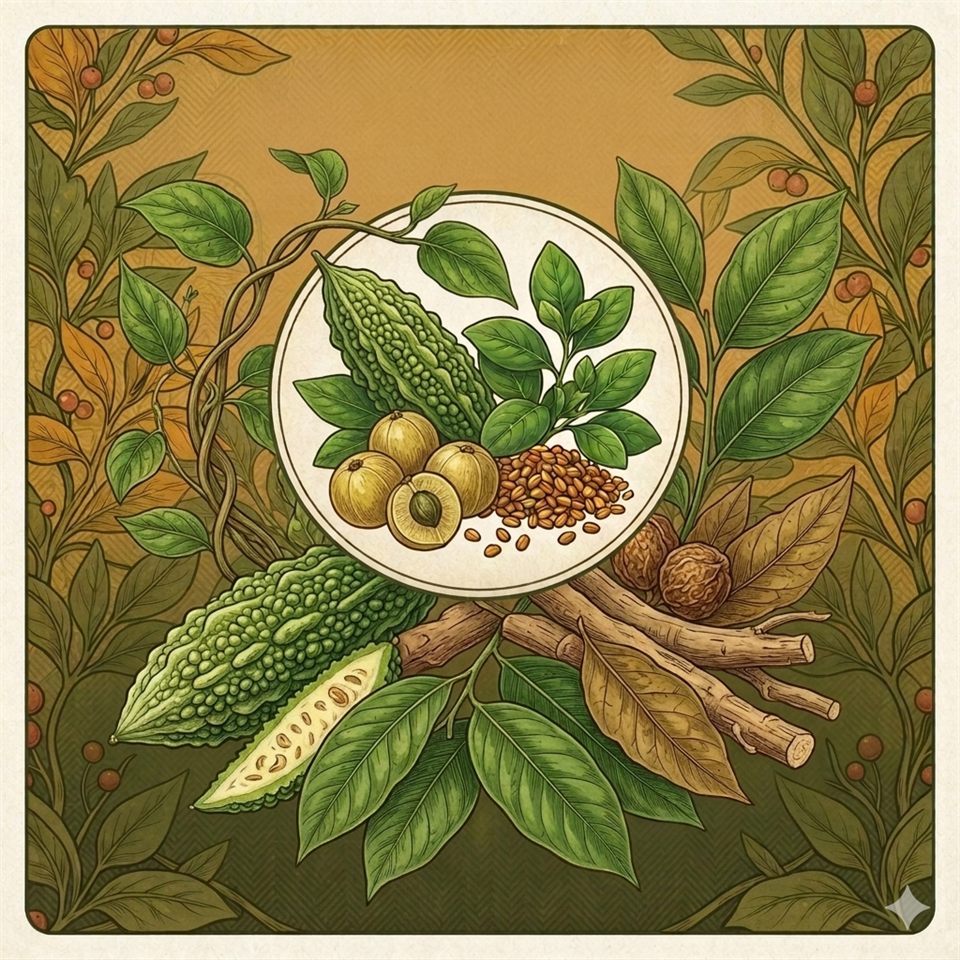
Blood sugar is one of the topics we get asked about most, and we understand why. So many families here in Laredo have watched a loved one live with diabetes, and plenty of us are keeping an eye on our own numbers too. So we want to talk about the herbs that people have reached for over the centuries — honestly, warmly, and with the care this subject deserves.
Before we name a single herb, we need to say something plainly, and we will say it more than once because it matters more than anything else on this page.
Please read this first
If you have diabetes or think you might, your doctor is your most important partner — not us, and not any herb. None of the plants below treat, cure, control, or prevent diabetes or high blood sugar. We are simply describing how they have been used in traditional practice.
A few cautions we ask you to take seriously:
- Never stop or change a prescribed medication because you started taking an herb. Only your doctor should adjust your medicine.
- Some of these herbs are traditionally thought to affect blood sugar, and they can interact with diabetes medications — sometimes pushing blood sugar dangerously low. That is a real risk, not a scare tactic.
- Keep monitoring your levels and tell your healthcare provider about anything you are taking, including herbs and teas.
With all of that said clearly, here are some of the plants long connected with blood sugar in traditional practice.
Herbs long valued in traditional practice
Ceylon cinnamon. The warm, sweet “true” cinnamon has been sprinkled into food and steeped into teas for generations, and it is one of the herbs most often mentioned in conversations about healthy blood sugar. Many people simply enjoy it as a daily comfort.
Fenugreek. These little golden seeds are a kitchen staple across India and the Middle East. They have a long folk history tied to blood sugar support, and the seeds are also traditionally used to help with digestion.
Gymnema. In Ayurvedic tradition this plant earned the nickname “sugar destroyer,” partly because chewing the leaf can briefly dull the taste of sweetness on the tongue. It has been used for a very long time in that tradition in connection with sugar cravings and blood sugar.
Bitter melon. A knobby green gourd eaten as a vegetable across Asia, the Caribbean, and Latin America. It is famously bitter, and it carries a deep folk association with blood sugar in many cultures.
Nopal (prickly pear cactus). Close to home for us in South Texas, nopales have been part of the Mexican table for centuries. The tender pads are eaten in eggs, salads, and stews, and they are traditionally valued for supporting overall wellness, including healthy blood sugar.
Banaba. The leaves of this flowering tree from Southeast Asia have a long history of being brewed into tea, where it is traditionally used in connection with blood sugar.
Berberine-containing herbs. Plants like goldenseal and barberry contain a compound called berberine and appear often in traditional herbalism. These are potent plants that especially deserve a doctor’s input before use.
Holy basil (tulsi). A sacred plant in India, holy basil is traditionally used to help the body cope with everyday stress, and stress is something anyone watching their blood sugar knows well.
A word from Adrian
We share this gently, as one person’s experience and not a promise for anyone else. Adrian, who makes our remedies, once faced type 2 diabetes himself. What helped him were real, unglamorous changes — how he ate, how he moved, how he slept — alongside herbs he had come to love. Just as importantly, he did all of it while working closely with his physician and continuing the medication his doctor prescribed. He never went it alone, and he would be the first to tell you not to either. His story is his own; your path is yours to walk with your own doctor.
How we think about it
Herbs, at their best, are quiet supporters of a healthy life — not replacements for medical care. If you are curious, you are always welcome to explore our herb collection or reach out to talk with us about a custom blend. But please bring your doctor into the conversation first. Managing blood sugar well is a team effort, and the best team keeps your physician right at the center of it.
Take good care of yourself. You deserve steady, patient support — and the people who love you deserve to keep you around for a long, healthy time.
A note on wellness: These statements have not been evaluated by the FDA. Our products and articles are for general wellness and educational purposes and are not intended to diagnose, treat, cure, or prevent any disease. Always talk with a qualified healthcare provider before using herbal products, especially if you are pregnant, nursing, taking medication, or managing a health condition.